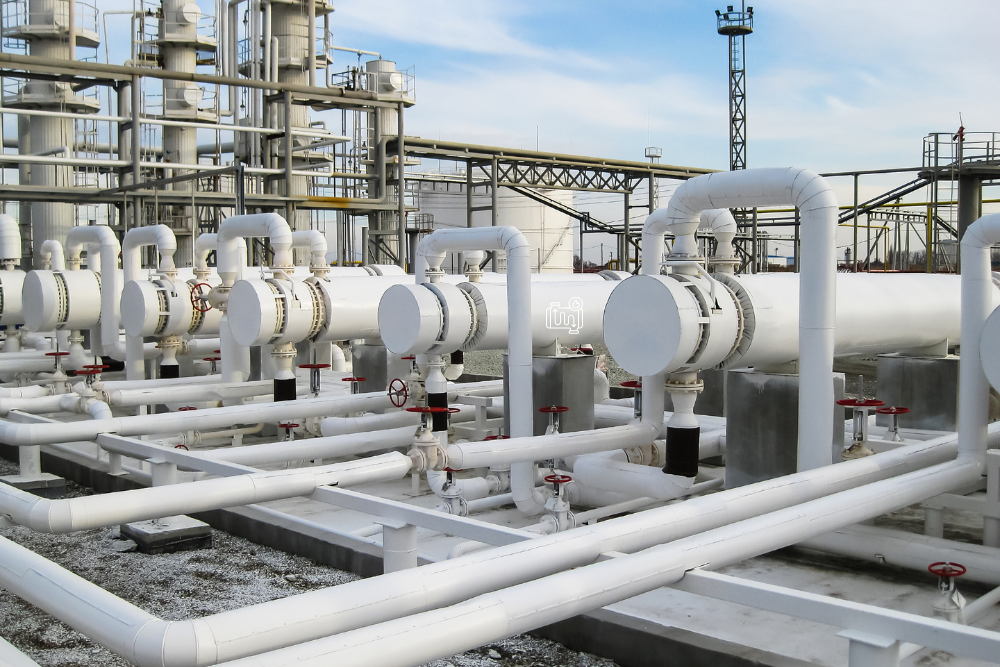
The design of a heat exchanger is an essential expertise in chemical engineering. It is widely used in various industries such as oil and gas energy plants, the processing of food as well as HVAC system. A well-designed heat exchanger calculation will ensure efficient heating transfer, energy efficient and cost-effectiveness. This guide will walk you through the fundamental elements of creating a heat exchanger in a simple and straightforward manner.
- Define Process Requirements
It is the first thing to define the parameters of the process. This includes:
- Inlet temperatures of cold and hot fluids and outlet temperatures
- The flow speeds of both liquids
- Physical properties like density, viscosity, and specific heat
Awareness about these factors is important as they impact your overall plan. Engineers typically learn these basics by taking a structured process design course, in which actual scenarios and calculations are discussed in depth.
- Perform Energy Balance
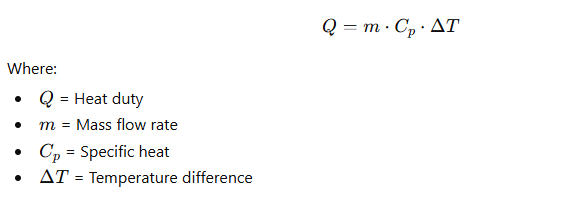
Then, you can apply the basic equilibrium equation for the energy:
This calculation will help you determine the amount of heat that needs transfer between fluids. Making sure that both cold and hot sides are in line with the energy transfer is vital to an accurate design.
- Select Heat Exchanger Type
There are a variety of heat exchangers. But the most popular one used in industry is the tube and shell kind. It is durable, scalable and is suitable for high pressure applications.
A typical tube and shell heat exchanger design is one fluid flowing within tubes, while the other is outside the tubes in the shell. This configuration permits efficient heat transfer and simple maintenance.
- Calculate Log Mean Temperature Difference (LMTD)
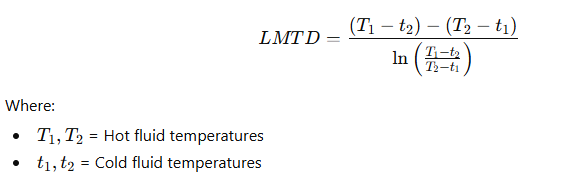
The force driving temperature is determined by using this method: LMTD method:
LMTD provides a more precise depiction of temperature variations throughout the heat exchanger as compared simply averages.
- Estimate Overall Heat Transfer Coefficient (U)
The total heat transfer coefficient is determined by:
- Fluid properties
- The flow system (laminar or turbulent)
- Factors that cause a hazard
- Material used in construction
The typical values of U can be derived from design manuals or empirical correlations. This process plays an important function in determining the necessary surface area.
- Calculate Heat Transfer Area
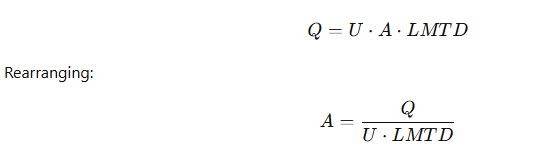
Use the basic heating transfer formula:
This will give the required surface area for heat transfer. A well-designed heat exchanger size guide will allow engineers to quickly determine and verify these calculations in designing phase.
- Design Geometry and Layout
After the area has been calculated then the second step would be to determine:
- The number of tubes
- Tube length and diameter
- Shell diameter
- tube arrangement (triangular or square pitch)
These factors impact the performance, pressure drop and manufacturing.
- Check Pressure Drop
Pressure drop should stay within acceptable boundaries for the operation is efficient. An excessive pressure drop could result in higher pumping costs and operational problems. Both tube-side and shell-side drops can be calculated, and then optimized at this phase.
- Consider Fouling and Safety Factors
In real-world scenarios, the process of fouling (deposit buildup) can reduce performance over a period of time. Designers incorporate fouling factors to ensure the long-term performance. Safety margins are also included to take into account risks in operating conditions.
- Final Optimization and Validation
In the end, the design is reviewed and modified to:
- Cost effectiveness
- Performance of the thermal system
- Mechanical Integrity
Chemical Engineering Software tools such as HTRI or Aspen can be utilized to validate calculations, however the ability to understand manual calculations is vital for any engineer.
Conclusion
A methodical approach to calculate the design of a heat exchanger will ensure reliable and effective efficiency in applications for industrial use. From defining process parameters to calculating heat transfer areas and maximizing geometry, every stage plays an essential part. No matter if you’re a student, or an experienced professional, understanding the fundamentals, which are often taught in a great process design class, will significantly improve your capabilities in engineering.