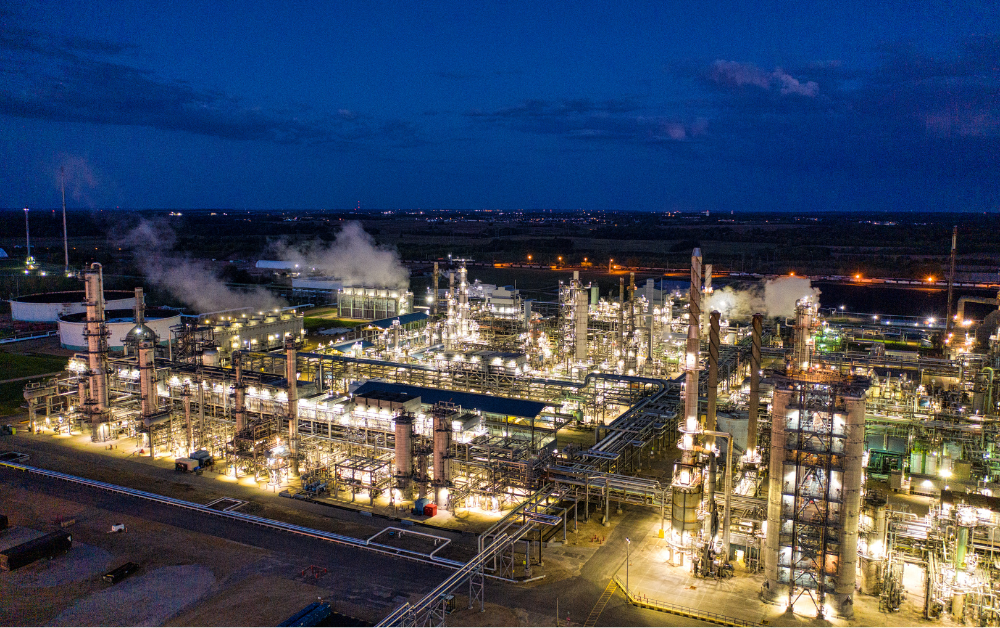
Separation is a crucial element in all chemical manufacturing plants. Separation is a process used to separate, purify, or extract valuable substances from chemical reactions, or even during manufacturing. Without effective separation processes techniques, industries would struggle to improve the quality of their products as well as reduce waste and boost the profitability of their operations.
In this blog in this post, we’ll explore the most commonly used chemical separation process types used across the oil and gas, pharmaceutical, food, and petrochemical sectors.
Mechanical Separation Processes
Mechanical separation techniques are based on the differences in dimensions of particles and their physical properties instead of chemical reactions.
Common examples include:
- Filtration
- Centrifugation
- Screening
- Sedimentation
They are used extensively to eliminate solid particles from gases or liquids and are usually the initial stage before purification.
Thermal Separation Processes
The thermal methods are used to separate the components on the basis of differences of boiling temperatures or the volatility.
Some of the most popular processes include:
- Distillation
- Fractional Distillation
- Evaporation
- Drying
Distillation is one of the most commonly used methods of chemical separation in refineries and chemical plants to convert liquids into high-purity substances.
Mass Transfer Separation Processes
Operations to transfer mass quantities involve the transfer of an element from one phase to the next.
Examples include:
- Absorption
- Stripping
- Liquid-Liquid Extraction
- Leaching
These techniques are widely employed for gas purification as well as solvent recovery. They are also used for the extraction of important compounds from raw materials.
Membrane Separation Processes
Modern manufacturing companies are increasingly using membrane technology because they use less energy and offer superior product quality.
The most common membrane techniques are:
- Reverse Osmosis (RO)
- Ultrafiltration (UF)
- Nanofiltration (NF)
- Microfiltration (MF)
These systems are widely used in the areas of water treatment, manufacturing, pharmaceuticals, food production, and other areas.
Adsorption and Ion Exchange
Adsorption makes use of solid materials such as molecular sieves and activated carbon to remove impure fluids.
Ion exchange is extensively utilized to:
- Water softening
- Demineralization
- Chemical purification
These methods of separation are highly effective when trace contaminants have to be removed.
Crystallization and Precipitation
Crystallization creates solid crystals from the solution through the control of the temperature or concentration. It is widely utilized in fertilizers, pharmaceuticals, and other chemical industries that specialize in specialty chemicals.
Precipitation separates the dissolved substances into solids insoluble by precisely controlled chemical processes.
In the types of separation, the process of crystallization can be one of the most efficient methods to achieve extremely high quality.
Choosing the Right Separation Process
The choice of the right separation method is based on a number of variables:
- Chemical and physical properties of the mix
- The purity of the product is a requirement
- Energy consumption
- Operating costs
- Production capacity
- Regulations on environmental and safety
Process engineers consider these elements when designing the plant to ensure the highest efficiency and lowest operating costs.
Build Your Career in Process Engineering
Understanding different types of separation is a crucial requirement for any chemical engineer. These concepts are thoroughly covered in an advanced process engineer course in which students are taught processes calculations, equipment design, as well as simulation software along with industrial and engineering applications.
In the Energy Learning Institute, students receive instruction with industry professionals through actual-world scenarios along with process simulation tools. If you’re a student or an employee, mastering the art of separation technology can greatly enhance your chances of a career in process design engineering.
Conclusion
Each chemical separation process is designed to serve a particular purpose, and deciding on the best method is crucial to maximize the efficiency of your plant in terms of product quality and operating costs. From mechanical filtration to advanced membrane technologies, these techniques are the basis for modern production of chemicals. Through mastering these principles by taking a high-quality process engineer program through the Energy Learning Institute, aspiring engineers can create a solid base for a job in the chemical industry.